Emergency Preparedness for Beginners
A calm, practical introduction to getting started with emergency preparedness at home.
Published: Last updated:
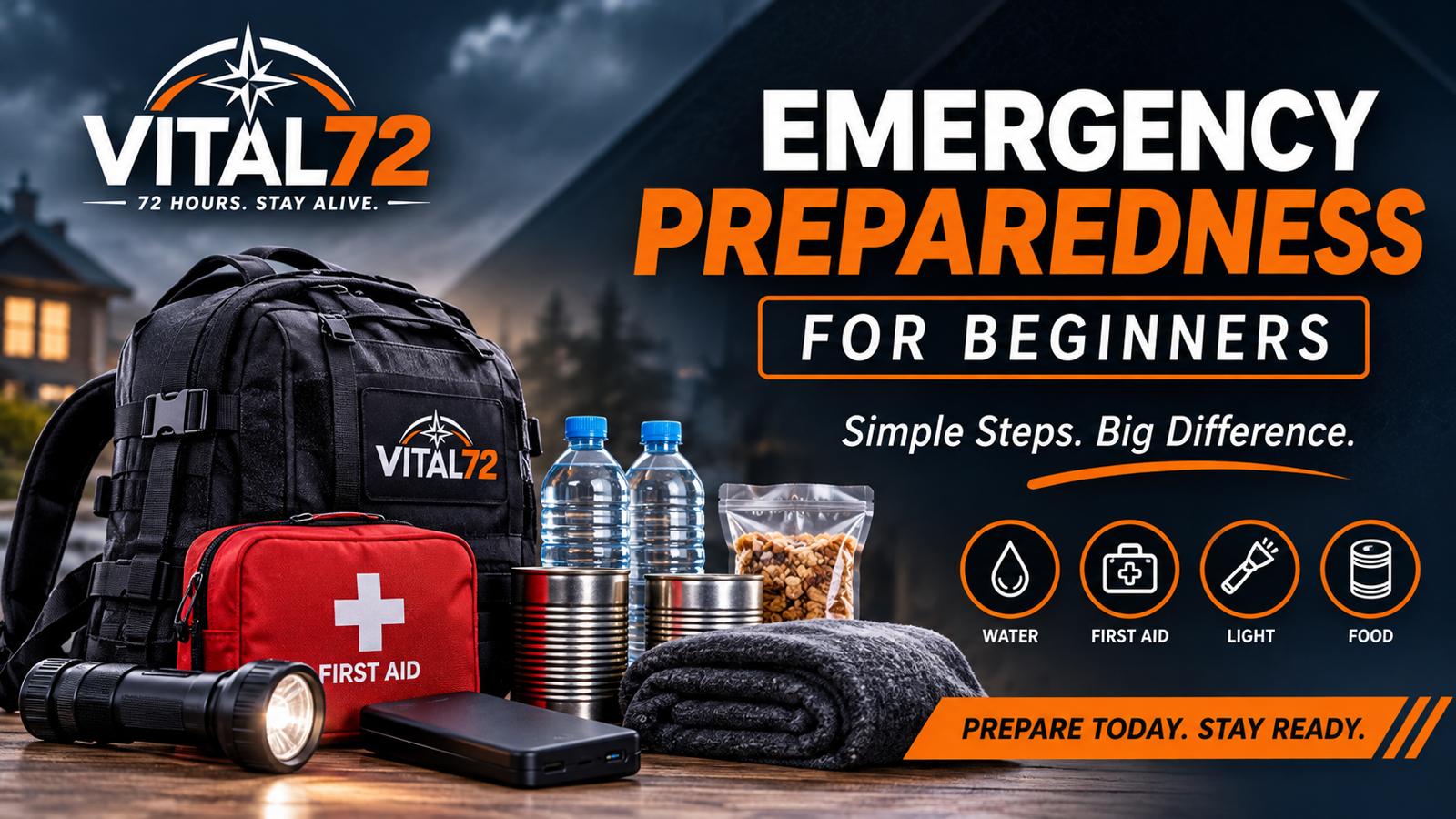
Emergency preparedness does not need to be complicated, expensive or frightening. It begins with a few simple decisions that can make everyday disruptions easier to manage.
A power outage, severe storm, water supply interruption or local evacuation may happen unexpectedly. Having a basic plan and essential supplies can help you respond more calmly.
At VITAL72, we believe preparedness is not about expecting the worst. It is about making sensible preparations today.
1. Start With the First 72 Hours
A useful starting point is preparing your household to manage essential needs for at least three days.
During an emergency, electricity, running water, mobile networks, shops and transport may be disrupted. Emergency services may also be under pressure.
Think about five basic needs:
- Safe drinking water
- Food that requires little or no cooking
- Light and essential power
- Communication and reliable information
- Medication, hygiene and personal safety
Your goal is not to prepare for every possible disaster. It is to build a practical foundation.
2. Understand Your Household's Needs
Every household is different.
Before buying supplies, consider:
- How many people live in your home?
- Are there children, older adults or people with disabilities?
- Does anyone depend on regular medication or powered medical equipment?
- Do you have pets?
- Could you safely remain at home without electricity or running water?
- Where would you go if authorities instructed you to evacuate?
Write down your answers. This simple exercise helps you avoid unnecessary purchases and identify your priorities.
3. Store Emergency Drinking Water
Water is one of the most important emergency supplies.
As a practical VITAL72 planning target, consider approximately 4 litres per person per day, including drinking and basic food preparation. This is broadly comparable to the US recommendation of one gallon per person per day.
- Source: Ready.gov — Emergency Water Supply — https://www.ready.gov/water (opens in a new tab)
For three days, that means:
- 1 person: 12 litres
- 2 people: 24 litres
- 3 people: 36 litres
- 4 people: 48 litres
These are planning estimates, not a universal official requirement. Local civil protection guidance may differ. Hot weather, illness, pregnancy and other circumstances can increase water needs.
Store drinking water in suitable, clean containers, away from direct sunlight and contamination. Follow the storage and replacement guidance for the containers or packaged water you use.
4. Build a Simple Emergency Food Supply
Start with foods your household already enjoys and can store safely.
Examples include canned vegetables, beans, fish, ready-to-eat meals, crackers, nut butter and other shelf-stable foods.
Choose foods that:
- Have a suitable shelf life
- Require minimal water or cooking
- Meet household dietary requirements
- Can be opened without electricity
Remember a manual can opener if needed.
Rotate supplies through normal household use and replace items before they expire.
Never use outdoor grills, charcoal burners or camping stoves indoors. They can produce deadly carbon monoxide.
5. Prepare for a Power Outage
A power outage can affect lighting, heating, refrigeration, internet access and phone charging.
Begin with a small collection of practical items:
- LED torch or battery-powered lantern
- Spare batteries
- Charged power bank and charging cables
- Battery-powered or hand-crank radio
- Warm clothing and blankets
- A written list of important telephone numbers
Use battery-powered lighting instead of candles whenever possible.
If you use a generator, operate it outdoors and well away from windows, doors and ventilation openings, following the manufacturer's instructions.
If someone relies on electrically powered medical equipment, make a specific backup plan with their healthcare provider.
6. Make a Family Emergency Plan
A plan is just as important as supplies.
Agree on:
- Meeting points: Choose one nearby location and another outside your neighbourhood.
- Emergency contacts: Keep important numbers on paper and on your phone.
- Communication: Decide how to contact each other if mobile networks are congested.
- Evacuation: Know your exits, possible routes and temporary accommodation options.
- Responsibilities: Decide who will assist children, older adults or anyone needing help.
Review the plan together so everyone understands what to do.
7. Prepare a Small Emergency Bag
An emergency bag contains essential items you may need if you must leave home quickly.
Consider including:
- Copies of important documents
- Necessary medication and first-aid supplies
- Drinking water and ready-to-eat snacks
- Torch and spare batteries
- Power bank and charging cable
- Personal hygiene items
- Suitable clothing
- Emergency contact information
- Essential supplies for children or pets
Keep the bag somewhere accessible.
Home emergency supplies and an evacuation bag serve different purposes. You may need both.
8. Know Where to Find Reliable Information
During an emergency, inaccurate information can spread quickly.
Follow official local authorities, emergency management agencies, weather services and public broadcasters for current instructions.
Useful reference organisations:
- European Commission — https://commission.europa.eu/topics/preparedness_en (opens in a new tab)
- German Federal Office of Civil Protection (BBK) — https://www.bbk.bund.de/ (opens in a new tab)
- Ready.gov — https://www.ready.gov/ (opens in a new tab)
- International Federation of Red Cross and Red Crescent Societies — https://www.ifrc.org/ (opens in a new tab)
Official advice in your country or municipality always takes priority over general online guidance.
9. Start Small: Your First Seven Days
You do not need to complete everything at once.
- Day 1: Identify your household's essential needs.
- Day 2: Check and begin storing drinking water.
- Day 3: Set aside basic emergency food supplies.
- Day 4: Check torches, batteries and power banks.
- Day 5: Write down emergency contacts.
- Day 6: Discuss meeting points and evacuation arrangements.
- Day 7: Review your supplies and identify what is missing.
Improve your preparations gradually.
10. Keep Your Plan Up to Date
Preparedness is not a one-time purchase.
Review your supplies and household plan periodically, especially when family circumstances change.
Check food dates, water storage, batteries, medication requirements and contact information.
Practise your plan occasionally so it becomes familiar rather than stressful.
Final Thought
You do not need to be an expert to become better prepared.
Essential supplies, reliable information and a clear household plan can make a meaningful difference when everyday services are disrupted.
Preparation is not about fear. It is about confidence.
VITAL72 — Prepare Today. Stay Ready.
Sources & Further Reading
- European Commission — Preparedness Union Strategy: https://commission.europa.eu/topics/preparedness_en (opens in a new tab)
- Germany's Federal Office of Civil Protection (BBK): https://www.bbk.bund.de/ (opens in a new tab)
- Ready.gov — Emergency Preparedness: https://www.ready.gov/ (opens in a new tab)
- Ready.gov — Water: https://www.ready.gov/water (opens in a new tab)
- International Federation of Red Cross and Red Crescent Societies: https://www.ifrc.org/ (opens in a new tab)
General guidance, not emergency instructions
This article offers general information to help you prepare. It is not medical advice and it is not an instruction for an emergency. In an urgent situation, call your local emergency number and follow the instructions of the emergency services and local authorities.
Emergency numbers
- 112EU, including Germany and Austria
- 999 or 112United Kingdom
- 911United States
Keep learning
Make it personal
The My 72-Hour Plan tool, opened with the button at the bottom right of the screen, asks a few short questions and gives you a general checklist for your household. Your answers stay in your browser window.