How to Prepare for a 72-Hour Emergency
A practical guide to preparing your household for the first 72 hours of an emergency, covering water, food, power outages, communication, medication, evacuation and a step-by-step action plan.
Published: Last updated: Reading time: 6 min read
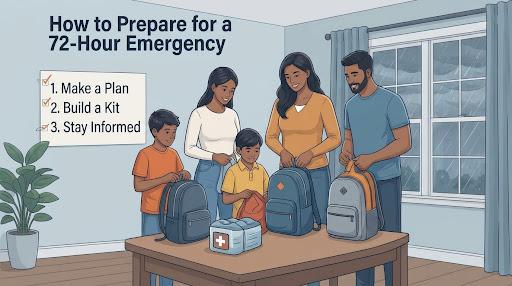
Emergencies can disrupt everyday life with little warning. Severe storms, floods, earthquakes and extended power outages may interrupt electricity, drinking water, transport, communications and access to essential supplies.
The first 72 hours can be especially challenging while emergency services assess conditions and restore critical infrastructure.
Preparing does not mean expecting the worst. It means making practical decisions today so your household has more options tomorrow.
This guide explains how to prepare for the first three days, what to prioritise and when to seek help or evacuate.
1. Understanding the first 72 hours
Different emergencies require different responses. A power outage may mean staying safely at home, while a wildfire, flood or structural hazard may require immediate evacuation.
Personal safety always comes first.
Before an emergency:
- Learn which hazards are relevant to your area.
- Identify official emergency alerts and information channels.
- Understand your building’s evacuation routes.
- Know how to shut off utilities when instructed and when safe.
- Discuss basic emergency procedures with your household.
A 72-hour plan is a starting point, not a guarantee that services will be restored within three days.
2. Drinking water
Access to safe drinking water may be interrupted by damaged infrastructure, contamination or electricity failures.
As a practical planning allowance, VITAL72 suggests approximately 4 litres per person per day for drinking and limited food preparation. Individual needs vary. Additional water may be required for hygiene, pets and other household needs.
Suggested three-day supply:
- 1 person: 12 litres
- 2 people: 24 litres
- 3 people: 36 litres
- 4 people: 48 litres
Use suitable food-grade containers or commercially sealed drinking water. Store supplies in a cool, clean place away from chemicals and direct sunlight.
Follow manufacturers’ storage instructions. If authorities issue a boil-water or do-not-drink notice, follow their instructions. Boiling does not remove chemical contamination.
3. Three-day food supply
Choose foods that can be eaten without refrigeration and, where possible, without cooking.
Useful options:
- Canned beans, vegetables, fish and ready-to-eat foods.
- Nuts, dried fruit and suitable energy bars.
- Crackers, cereals and other shelf-stable products.
- Special foods for infants or people with dietary requirements.
- Pet food where applicable.
Include a manual can opener if necessary. Select familiar foods and rotate supplies before expiry.
During a power outage, keep refrigerator and freezer doors closed as much as possible. Follow official food-safety guidance before eating refrigerated or frozen food.
Never use outdoor grills or fuel-burning camping equipment indoors because of carbon monoxide poisoning risks.
4. Power and lighting
A prolonged power outage can affect lighting, heating, refrigeration, communications, water pumps and medical equipment.
Prepare:
- Battery-powered or rechargeable LED lights.
- Spare batteries or reliable charging options.
- Fully charged power banks.
- A battery-powered or hand-crank radio.
- Warm clothing and blankets.
- A safe alternative plan for extreme heat or cold.
If your household relies on electrically powered medical equipment, arrange an individual backup and evacuation plan with your healthcare provider and electricity supplier where applicable.
Never operate generators, charcoal grills or fuel-burning stoves indoors, in garages or near doors, windows and ventilation openings.
5. Emergency communication
During an emergency, mobile networks and internet connections may become unreliable.
Before an emergency:
- Save important telephone numbers offline.
- Identify local emergency warning systems.
- Agree on a family meeting point.
- Choose an out-of-area contact who can receive updates.
- Keep a written copy of essential contact information.
During an emergency, use text messages when networks are congested, if messaging remains available.
Follow official public authorities and emergency services rather than unverified social media reports.
In the European Union, 112 is the common emergency telephone number. Other national emergency numbers may also apply.
6. Medication and documents
A three-day emergency plan should consider medical and personal needs.
Prepare an accessible list of:
- Essential prescription medicines and dosage instructions.
- Allergies and important medical information.
- Healthcare contacts.
- Identification documents.
- Insurance and emergency contact details.
Maintain an appropriate reserve of prescribed medication where legally and medically possible, following advice from your pharmacist or healthcare professional.
Some medicines require temperature-controlled storage. Ask your pharmacist in advance how to protect them during a power outage.
Keep important documents in a waterproof pouch, and consider secure digital backups.
7. Staying home or evacuating
Not every emergency requires leaving home. However, remaining inside an unsafe building can be dangerous.
Stay at home only when it is safe and consistent with official instructions.
Evacuate immediately when directed by authorities or when there is an immediate danger such as fire, rising floodwater, structural instability or another serious hazard.
Prepare a small evacuation bag containing:
- Identification and essential documents.
- Medication and medical information.
- Drinking water and ready-to-eat food.
- Phone, charging cable and power bank.
- Flashlight and basic first-aid supplies.
- Suitable clothing and essential personal items.
Plan how children, older adults, people with disabilities and pets will travel safely.
Never drive or walk through floodwater.
8. A practical 72-hour action plan
BEFORE AN EMERGENCY
- Store drinking water and shelf-stable food.
- Prepare an emergency kit.
- Charge essential devices.
- Agree on household communication arrangements.
- Identify safe exits and alternative accommodation.
- Learn where official warnings are published.
DURING THE FIRST 24 HOURS
- Assess immediate hazards and follow official instructions.
- Check the safety of everyone in your household.
- Contact emergency services when urgent help is needed.
- Preserve phone battery and drinking water.
- Avoid unnecessary travel.
- Keep informed through reliable channels.
DURING HOURS 24–48
- Review available supplies and household needs.
- Check on neighbours or vulnerable relatives when safe.
- Monitor updates about water, electricity and transport.
- Maintain food hygiene and safe indoor temperatures.
- Reassess whether remaining at home is safe.
DURING HOURS 48–72
- Continue monitoring official guidance.
- Review remaining supplies and possible assistance.
- Prepare for a longer disruption if services have not returned.
- Follow local recovery or evacuation instructions.
- Avoid damaged infrastructure and unsafe areas.
These time periods are planning aids, not instructions to delay urgent action.
9. Making preparedness a habit
Emergency readiness works best when it becomes part of ordinary life.
Review your supplies regularly. Check batteries, medication dates, stored water, food and contact information. Practise your household plan and adapt it when family circumstances change.
You do not need to buy everything at once. Begin with water, communication, lighting and essential medication, then build your supplies gradually.
Final Thought
The goal of a 72-hour emergency plan is not to predict every possible crisis.
It is to reduce uncertainty, protect essential needs and help your household make safer decisions when normal services are disrupted.
PREPARE TODAY. STAY READY.
Sources & Further Reading
- European Commission — Civil Protection and Humanitarian Aid Operations: https://civil-protection-humanitarian-aid.ec.europa.eu/ (opens in a new tab)
- European Union — 112 emergency number: https://digital-strategy.ec.europa.eu/en/policies/112 (opens in a new tab)
- German Federal Office of Civil Protection and Disaster Assistance (BBK): https://www.bbk.bund.de/ (opens in a new tab)
- International Federation of Red Cross and Red Crescent Societies (IFRC): https://www.ifrc.org/ (opens in a new tab)
- Ready.gov — Build a Kit: https://www.ready.gov/kit (opens in a new tab)
- Ready.gov — Power Outages: https://www.ready.gov/power-outages (opens in a new tab)
General guidance, not emergency instructions
This article offers general information to help you prepare. It is not medical advice and it is not an instruction for an emergency. In an urgent situation, call your local emergency number and follow the instructions of the emergency services and local authorities.
Emergency numbers
- 112EU, including Germany and Austria
- 999 or 112United Kingdom
- 911United States